
Low-use and intermittent outlets: hotels, schools, sports and care facilities
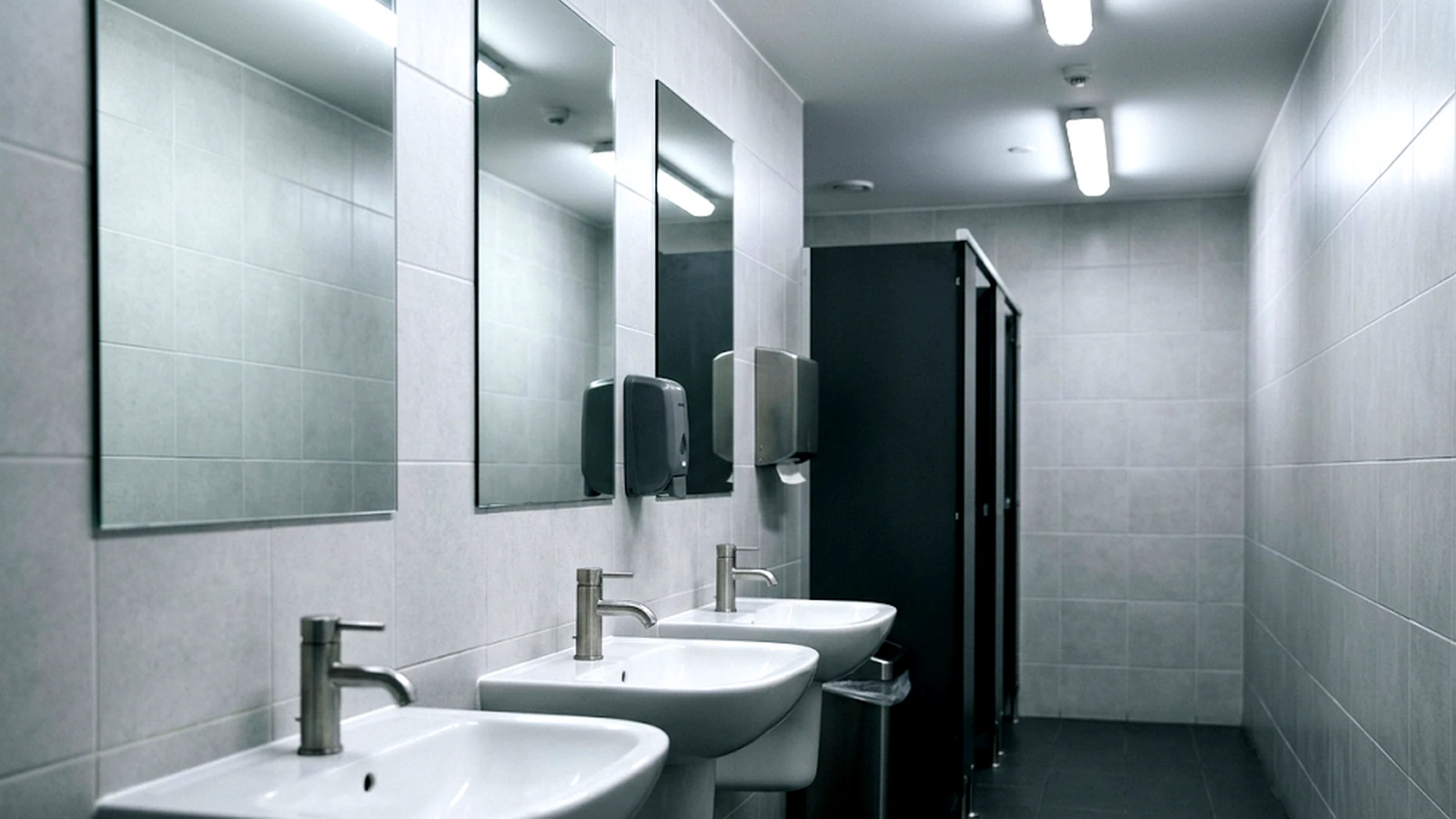
Low-use outlets are where water age accumulates, and they are usually identifiable before anything goes wrong. The work is finding them, establishing which pipework actually serves each one, and deciding how the water in that pipework gets exchanged. Automatic flushing is one way to do that, and it is the one that does not depend on somebody remembering.
- Ways water gets exchanged
- Four
- Use, a manual regime, pipework changes, and automatic flushing. They are not exclusive.
- The survey unit
- Branch
- What matters is not which outlets are used but which lengths of pipe have water passing through them.
- Duration
- Volume ÷ flow
- Derived from the volume held in the branch and the flow available at the outlet, plus a margin.
In this section
What counts as a low-use outlet
Not an unused one. A permanently disused outlet is a pipework problem, and the answer there is removal rather than flushing.
The difficult case is the outlet that is used, but not often enough or not regularly enough for the water in its branch to be exchanged within whatever period the site works to. That includes outlets used heavily on some days and not at all for a fortnight, which is a harder case than an outlet used lightly but steadily.
Some common examples, and they are examples rather than a list to work through. A guest room that is unbooked for two weeks in a quiet season. A washroom at the end of a corridor that people walk past on their way to a nearer one. A shower block in a facility busy on two evenings a week. A second sink in a laboratory installed for a process that changed. A tap in a plant room used only during maintenance. A washroom that measured or observed use shows to be rarely entered. Emergency showers and eyewash stations, which are almost never used by design.
The pattern behind all of them is the same: the fixture exists for a case that occurs rarely, or the building’s occupancy has changed since it was designed.
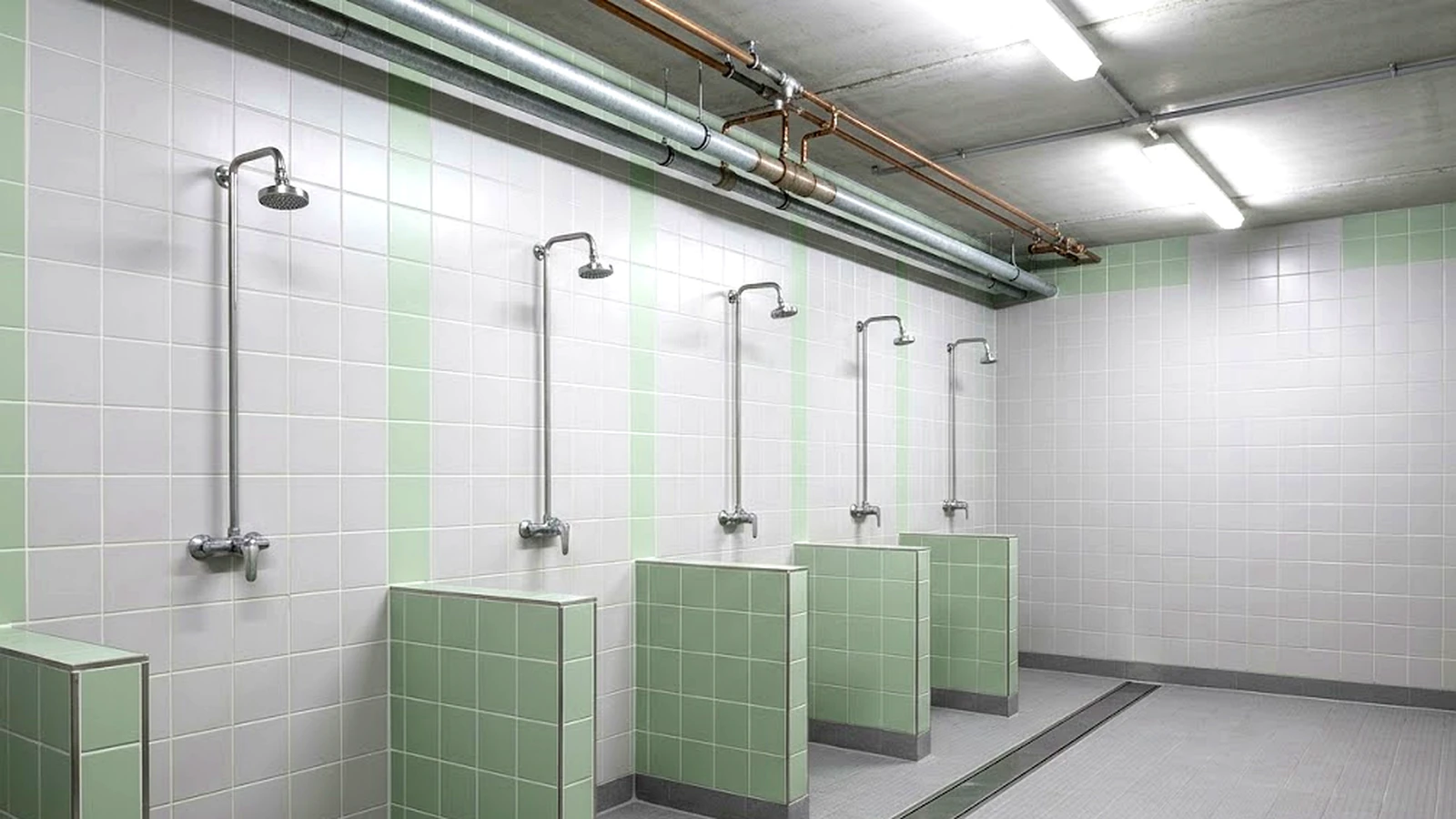
Showers sit differently in this list. An outlet that atomises water produces an aerosol that can be inhaled, and inhalation is the principal route by which Legionella reaches the lungs, though aspiration of contaminated water is also recognised. Some national rules attach their testing duties specifically to systems serving showers or other atomising outlets. A rarely used tap and a rarely used shower can hold the same standing volume without presenting the same exposure profile. Shower blocks in schools, sports facilities and seasonal accommodation are the sharpest case, because they atomise and can stand unused for extended periods.
Partial occupancy is harder than closure
A building that closes completely is straightforward. Everyone knows it is closed, there is a shutdown procedure, and there is a return-to-service procedure.
A building at sixty percent occupancy is more difficult, because nothing looks wrong. The system was sized for full occupancy, so at reduced occupancy the flow through the mains and risers falls, the water spends longer in the system before it reaches anyone, and outlets that were adequately used at design occupancy are now marginal.
Nobody declares this state, so nobody triggers a procedure for it.
The same applies to a wing taken out of use for refurbishment while the rest of the building operates normally, to a floor let to a tenant who has not moved in, and to a school in term time where a sports block is used twice a week.
Finding them
The survey is not complicated but it does have to be done properly, and the two common mistakes are worth naming.
What matters is not which outlets are used but which lengths of pipe have water passing through them. Two taps side by side may sit on different branches.
Cleaning staff, ward managers, caretakers and housekeepers generally know which outlets nobody touches. Where the building has usage data, that is better still.
One heavily used outlet at the end of a run can keep a whole branch turning over while a lightly used one nearer the riser contributes nothing to the branch beyond it.
The output should be a list of outlets, the branch serving each one, an estimate of the volume held in that branch, and a judgement about how often it is actually used. That list is what any flushing regime is built from, and without it the regime is guesswork with a schedule attached.
The ways water gets exchanged
Four, and they are not exclusive.
The best outcome, where it can be arranged. Moving a coffee point, changing a cleaning route, or reallocating rooms so that occupancy concentrates rather than spreads can remove the problem instead of managing it.
Staff visit the identified outlets and run them. Its dependencies are staffing, actual execution, and a record that can be reconstructed later.
Removing redundant legs, resizing an oversized branch, or reconnecting an outlet so that water passes through rather than terminating. Expensive at the time and permanent afterwards.
A valve at the outlet on a timer, exchanging the branch on a schedule. Commissioning, verification and maintenance remain human work.
Setting a regime that reflects the outlet
The interval comes from the site’s water management programme and the guidance that applies to it. The duration has to be derived rather than guessed: calculate the volume held in the branch, establish the flow available at the outlet under representative conditions, divide, and add a margin. Where supply pressure varies, size on the minimum credible flow.
Two properties of low-use outlets specifically affect this.
Irregular use makes a usage-resetting cycle less reliable than it appears. A cycle that resets whenever the outlet is used assumes the use exchanged the branch, and a brief use on a long branch does not. Where typical use is shorter than the exchange time, a fixed cycle avoids the assumption entirely.
And on a blended outlet, establish which leg the cycle actually exchanges. A mixed tap may not fully exchange either the hot or the cold line, and on a low-use outlet that is exactly the water that has been standing.
Flushing several outlets at once
Exchanging the water in a branch is a matter of volume and duration, and a modest flow will achieve it given long enough. Grouping applies in a narrower case: where the applicable regime or the hydraulic design calls for a target flow velocity in shared pipework, or where the flow path cannot otherwise be demonstrated. Opening several outlets simultaneously raises the flow and can reach a velocity a single outlet cannot.
It is not a free technique. Simultaneous opening only works where the supply can deliver the combined demand. In an installation that is undersized for it, or partly scaled, or degraded, the result can be a pressure drop, mixing valves pushed out of balance, disturbed deposits and discoloured water. Whether a group flush is appropriate is a hydraulic question about that specific installation, and it should be assessed rather than assumed.
Where no velocity condition applies, offsetting cycles across a building spreads the demand and avoids a whole riser drawing at the same minute.
What the record needs to show
Some water management programmes ask for evidence, and the useful discipline is to be precise about what each arrangement produces.
- A manual regime produces a logbook, and an activation observed by a person can attest to discharge and to the condition of the fixture.
- A controller that reports events produces a record, generated reliably, that a cycle was commanded at a given time.
- A temperature signal shows the expected thermal response, which is strong supporting evidence of exchange.
- A flow measurement shows that water passed the point of measurement.
Working this into a product?
Tell us the application, the environment, and the power budget. We will come back with a configuration.
Request configured samplesNeed the control electronics behind it?
Programmable switching, sensing, and firmware, developed and manufactured in-house.
Discuss your product development