
Accessibility requirements for taps, showers and flush controls: ADA and its equivalents
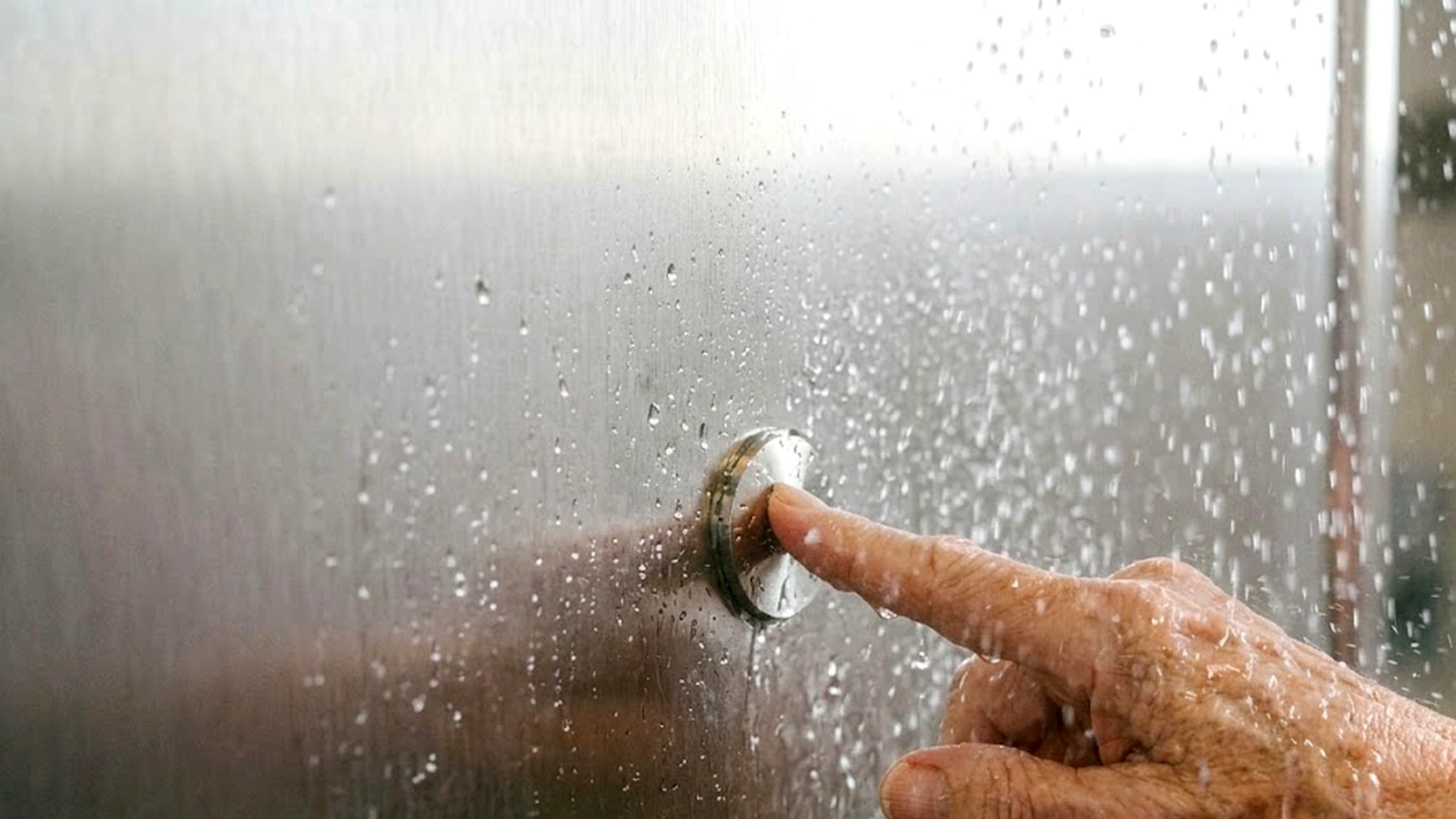
Accessibility rules govern how a tap, shower, or flush control is operated rather than what it looks like. In the United States an operable part must work with one hand, without tight grasping, pinching or twisting, and at no more than 22.2 newtons. Meeting that ceiling is a threshold rather than an achievement, but operating well below it is not wasted, because it widens the range of people who can use the control and leaves margin as a mechanism ages.
- ADA 309.4 maximum
- 22.2N
- Operable with one hand, without tight grasping, pinching or twisting.
- AS 1735.12 lift buttons
- 3.5 to 5N
- A window with a minimum, where tactile symbols are on the button face.
- ADA metering faucets
- 10seconds minimum
- Hand-operated. Motion-activated faucets are not subject to it.
In this section
What the ADA Standards require of a control
The 2010 ADA Standards for Accessible Design treat a tap handle, a shower control, and a flush actuator as operable parts, governed by section 309.
- Push
- Press
- Lever
- Touch
- Tight grasping
- Pinching
- Twisting of the wrist
Section 309.4 is the clause that decides most designs. An operable part must be usable with one hand, must not require tight grasping, pinching, or twisting of the wrist, and must not need more than 5 pounds of force, which is 22.2 newtons.
Section 309.3 places the operable part within the reach ranges of section 308, and 309.2 requires clear floor space to section 305, so the control must be both reachable and approachable. Section 606.4 applies these requirements to controls at lavatories and sinks. Separately, hand-operated metering faucets must remain open for at least 10 seconds; Access Board guidance applies this to metering faucets with manual or touch controls and notes that motion-activated faucets are not subject to the minimum.
Showers, bathtubs and public bathing rooms
Section 606.4 covers controls at lavatories and sinks. Showers and bathtubs are dealt with separately, and both route back to the same operating requirement while adding constraints on where the control goes.
For bathtubs, section 607.5 places controls other than drain stoppers on an end wall, between the bathtub rim and the grab bar, and between the open side of the tub and the centreline of its width. The controls themselves must comply with 309.4.
For shower compartments, section 608.5 requires controls, faucets and shower spray units to comply with 309.4, then sets the position by compartment type. In a transfer type compartment they go on the side wall opposite the seat, 38 to 48 inches (96 to 122 cm) above the shower floor and within 15 inches (38 cm) of the seat centreline toward the opening. In standard and alternate roll-in compartments they sit above the grab bar and no higher than 48 inches (122 cm), with a defined position relative to the seat where one is provided.
Public and institutional bathing rooms follow the same technical requirements, and the scoping rules decide how many fixtures they apply to. Under section 213.3.6, where bathtubs or showers are provided, at least one must comply with 607 or 608. That holds within multi-user bathing rooms, including where showers are enclosed by partitions for privacy. Guidance from the US Access Board confirms that where gang showers are provided a fully compliant shower is required, and that either a transfer or a roll-in compartment can be integrated into a gang shower arrangement.
For a manufacturer this produces a specific and common situation. A locker room with a dozen heads on a wall needs one compliant position, with a control meeting 309.4 at a defined height, and the remaining positions carry no such requirement. The installation is mixed rather than uniform, so a single control type that can be configured and mounted to suit both the compliant position and the ordinary ones fits that reality better than two different products.
Compliance is a threshold, usability is not
It is worth separating two things that product literature routinely runs together.
Compliance with 22.2 newtons is binary. A control either meets the requirement or it does not, and one that operates at a fraction of the limit is not more compliant than one that just satisfies it. Claiming otherwise misrepresents how the standard works.
Usability is not binary. The 22.2 newton figure is a maximum set to exclude controls that are unreasonably hard to operate; it is not a statement that everyone can manage 22.2 newtons. A control needing substantially less force is usable by more people, including those with significant grip weakness, and it leaves margin for a mechanism that stiffens over its service life. That is a real design benefit and it should be argued on those terms rather than as a compliance claim.
The other half of section 309.4 is not a number at all, and it excludes whole categories of hardware regardless of how light they are.
Guidance from the US Access Board is explicit that knobs requiring a full hand grip and turning, including round shower controls, do not comply, because the wrist has to twist. Lever handles and push-activated controls under the force limit are acceptable, and the same guidance notes that raised or flush buttons are easier to use than recessed ones.
Lighter is not universally better
The argument above holds where the user knows where the control is. It does not hold everywhere, and the exception matters because it applies to a different class of accessible control.
Some accessibility standards set a force window rather than a ceiling. AS 1735.12, the Australian lift accessibility standard adapted from EN 81-70, requires that where tactile symbols are provided on the face of a button, the force to operate it is not less than 3.5 newtons and not more than 5 newtons.
The minimum is deliberate. A blind or partially sighted user finds a control by touching the panel and reading the tactile marking with a fingertip. A control that activates on the lightest contact fires while it is being located, which turns a well-intentioned light action into an unusable one. The floor exists to make the button findable before it is operable.
So operating force is application-dependent rather than a figure to minimise. On a tap or a shower control, where the user reaches a known position and presses deliberately, low force widens the population who can use it. On a panel that a user has to read by touch, a control needs enough resistance to be explored without being triggered. A control whose force is set in configuration rather than fixed by a mechanism can serve both; one that cannot, cannot.
What else decides whether someone can use it
Force is one property among several, and the others are decided partly by the control and partly by how it is installed.
Whether it can be found
A physical control occupies a fixed position, which can be learned and located by touch. That is necessary but not sufficient for a blind or partially sighted user: a flush surface with no tactile cue, edge or marking is hard to find even when its position is fixed, so findability depends on the fixture and its integration as much as on the switch. Touchless controls raise the same question differently, since a detection field is invisible and its extent has to be discovered. Neither approach settles it on its own.
Whether it behaves the same way for everyone
Sensing by reflected infrared intensity depends on how much light returns, so low-reflectivity surfaces can return too little signal to trigger reliably, and skin tone, clothing, ambient light and nearby reflective surfaces can affect detection.
That failure mode is documented, and it belongs to the implementation rather than to touchless operation as such: conventional designs adjust sensitivity with hardware gain across a small number of steps, which amplifies noise along with signal, while fine-grained digital gain with real-time calibration narrows the gap between an easy target and a hard one. Access Board guidance notes that touch-free faucets accommodate a broad range of users, so this is a question to put to a specific product rather than a reason to avoid the category. The useful specifier question is how gain and calibration are handled, and how far detection distance varies between a light and a dark target. R-Force sensing sets out how RNC answers it.
Whether the operating force stays where it started
Mechanical controls change with use, as cartridge friction rises with ageing seals and scale. The requirement applies to the fixture in service rather than on a test bench, so a control that measured comfortably inside the limit at handover can drift outside it later with nothing visibly different. A control with no moving part in the actuation path has no equivalent wear mechanism, though the installed assembly around it still ages. This is an argument against mechanical actuation specifically; touchless controls have no actuation wear either.
Whether it works wet
Washrooms and shower areas are wet, and so are users’ hands. A wet lever can be harder to operate for someone with a weak grip, though a lever can often be pushed rather than gripped. Optical sensing has its own difficulty, since water on the hand or on the lens changes what returns to the detector. Force-operated piezo actuation responds to pressure on the surface rather than to skin contact or reflected light, so a wet finger, a gloved hand or a knuckle works the same as a dry fingertip. Capacitive touch is a different technology and does not share that property.
The same question, asked differently by market
Accessibility requirements exist in most markets RNC’s customers sell into, and they do not all take the same form. The difference matters when one product is sold into several.
The ADA Standards are unusual in giving a hard number for operating force, and they apply through civil rights law rather than through a building code alone, which is why the figure is so widely cited.
CSA/ASC B651, Accessible design for the built environment, is the reference. The sixth edition, CSA/ASC B651:23, was published in January 2023 and replaced the 2018 edition. It is developed jointly by Accessibility Standards Canada and CSA Group, is referenced in the National Building Code and in other legislation, and its current revision included updated guidance on controls. How it becomes binding depends on the jurisdiction and the type of facility.
EN 17210, published in 2021 and currently under revision, is the first comprehensive European standard for accessibility and usability of the built environment. Its character differs from the ADA Standards in a way that matters for design: it sets out functional requirements and recommendations expressed as protective goals rather than as quantified limits. It states what has to be achievable, not what number to meet. National standards continue alongside it, including the DIN 18040 series in Germany, parts of which have been superseded by the European standard and which is being harmonised with it under the precedence of German legislation, and BS 8300 in the UK alongside building regulations.
AS 1428.1, Design for access and mobility, general requirements for access in new building work, is the reference, with the 2021 edition superseding the 2009 one. It carries regulatory weight through the National Construction Code and the Premises Standards. It addresses tapware directly, covering height, reach, markings, and anti-scald provision, which places temperature limiting inside the accessibility requirement rather than treating it as a separate plumbing question. For lift controls, AS 1735.12 applies instead, adapted from EN 81-70, and it is the source of the force window described above.
Other markets maintain their own national accessibility standards, with their own scope and their own limits.
What differs and what does not
Stripped of their differences in form, these accessibility standards cover the same ground. The control has to be within reach and approach. It has to be operable by someone with limited hand function. And the force needed must not exclude people who would otherwise be able to use the fixture.
Where they diverge is in everything around the control. Mounting heights and reach ranges differ. Clear space dimensions differ. Signage and marking differ. Whether anti-scald provision sits inside the accessibility standard differs. Those are installation and configuration decisions.
So the control itself can usually be common across markets while the fixture around it is arranged per market. Where the control is programmable, the same applies to behaviour: a metered run time can be set to whatever the applicable rule requires rather than being fixed by a cartridge, and where temperature limiting falls inside the accessibility requirement, that is easier to satisfy with a control that can be configured.
What a component can and cannot do
Accessibility compliance belongs to the fixture as installed and to the building around it. A switch, a valve, or a controller is not compliant or non-compliant in itself.
Operating force, whether actuation requires grip or twist, whether the surface is flush or recessed, how consistently it responds across users, and whether run time can be set.
Findability, reach, clear floor space, mounting height and marking, all of which depend on the fixture and the installation.
Working this into a product?
Tell us the application, the environment, and the power budget. We will come back with a configuration.
Request configured samplesNeed the control electronics behind it?
Programmable switching, sensing, and firmware, developed and manufactured in-house.
Discuss your product development