
Prisons & Correctional Facilities

Indestructible by design. Intelligent by default.

Correctional facilities demand more from interface components than any other environment. Controls face deliberate, sustained attack. Every maintenance entry is an operational risk. Equipment failure in a cell cannot go undetected. RNC solid-state technology addresses all three: hardware that cannot be dismantled or weaponized, PT Plus intelligence that prevents abuse through programmable behavior, and self-diagnostic capability that confirms every intercom and call point is operational without anyone entering the cell.

Key challenge
Anti-ligature, anti-tamper, abuse-resistant behavior, and confirmed operational reliability without cell entry
Relevant products
IP69KSealed
IK10+Impact
3mmThrough metal
50M+Activations
PT PlusProgrammable
Jump to Sanitary & plumbing In-cell controls Thick surfaces PT Plus intelligence Self-diagnostics
The environment

What correctional facility controls face.

Controls in correctional environments face a threat model found nowhere else. Hardware is subjected to deliberate, sustained attack using improvised tools. Inmates coordinate to stress plumbing systems through repeated simultaneous activations. Any component that can be removed is a potential weapon or ligature point.

Beyond the physical attack problem, every maintenance entry into a secure area carries risk. Correctional officers should not need to enter a cell to test a call button or verify an intercom. And if that intercom fails silently, a medical emergency inside the cell may go undetected.

Physical attack and tool damage
Buttons pried, drilled, and struck with improvised tools. Exposed piezo discs can be targeted directly. Standard piezo construction cannot withstand this.
Coordinated system abuse
Repeated simultaneous toilet flushes and water activations used to stress plumbing infrastructure. Controls must enforce lockout intervals regardless of how many activations are attempted.
Maintenance access risk
Every entry into a secure area is an exposure risk for correctional staff. Interface components that require physical inspection or manual testing multiply this risk unnecessarily.
Silent equipment failure
A malfunctioning cell intercom or call button may not be discovered until someone needs it. In a medical emergency, this is a life-safety failure.
Sanitary & plumbing controls

Showers, toilets, and water activation.

Correctional sanitary controls operate under conditions that combine deliberate abuse, aggressive cleaning, and constant moisture. Standard flush buttons and shower controls have mechanical components that fail, degrade, and can be targeted. RNC solid-state controls eliminate all of this and add the programmable intelligence to manage usage behavior.
Shower controls
Timed water flow with configurable lockout between activations. Prevents water waste and coordinated flow abuse. IP69K sealed for direct shower exposure. Auto-flush cycles for Legionella compliance in institutional shower facilities.
Toilet and flush activation
Standard gravity flush and vacuum toilet systems. Lockout timer prevents coordinated simultaneous flushing used to stress plumbing infrastructure. Configurable minimum intervals between activations per cell or per zone, enforced in hardware.
Water and basin controls
Timed tap activation with flow duration limits. Sensitivity adjustable to eliminate accidental activation while ensuring reliable intentional use. Operates through standard cell-grade stainless steel without modification to existing surfaces.
Featured product
PTF-22-PDC
Programmable Piezo Switch for Sanitary Applications

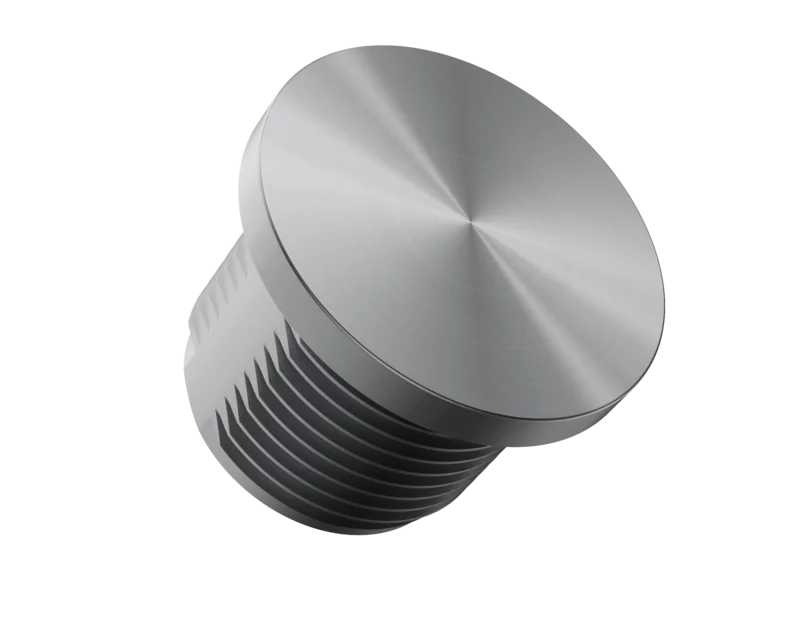
Designed for institutional sanitary applications. Configurable flow time, lockout intervals, hygiene flush cycles, and sensitivity. Operates latching and non-latching solenoid valves on battery or mains (6–24V DC). Self-test reports operational status on demand. Standard M22 thread for drop-in integration.

Full product details
PTF-22-PDC Programmable Piezo Switch
In-cell controls

Cell intercom, call systems, and in-cell functions.

Every control inside a cell must be impossible to remove, impossible to damage through the front surface, and must operate reliably for the life of the facility. For call buttons and intercom controls, reliability is not a performance metric. It is a safety requirement.

Cell intercom and call buttons
M22 format piezo switches integrate directly into standard cell intercom housings. Senses through the intercom faceplate without requiring a separate cutout or bezel. One-piece flush surface with no attachable or removable components.
In-cell entertainment controls
TV and media controls embedded in stainless steel wall panels. No protruding buttons, no membrane overlays, no touch-sensitive glass. Solid metal surface with piezo sensing underneath. Configurable sensitivity to require deliberate activation force.
Multi-function cell panels
Single stainless panel integrating call, intercom, lighting, and entertainment controls. Custom key layouts and engraved graphics. No separate housing components. Anti-ligature, flush-mount, no protrusions of any kind.
Thick surface advantage

The disc is the target. Put it out of reach.

Standard piezo switches sense through surfaces up to 0.5mm thick. That puts the piezo disc close enough to the front surface to be targeted with improvised tools. A sharp object can reach it through the thin faceplate.

RNC senses reliably through surfaces up to 3mm thick. At 1.5mm stainless steel, standard for cell hardware, the piezo disc is physically inaccessible. No tool carried into a cell can reach it. The surface does not just resist attack; it makes the internals structurally unreachable.

0.5mm
Industry standard. Thin faceplate. Disc reachable with improvised tools. Vulnerable to targeted attack.
1.5mm
Standard cell stainless. Disc is physically inaccessible. No tool available in a cell can reach it.
3mm
Maximum protection. The front surface is structural armor. Impervious to any attack method available in a secure facility.
PT Plus intelligence

Programmable behavior without firmware changes on site.

PT Plus embeds programmable logic, output control, and communication capability into the switch itself. In correctional applications, this means behavioral parameters are enforced in hardware. No controller update needed, no software dependency on a third-party system, no change in wiring.

Parameters can be reconfigured remotely. Security level changes, lockout interval adjustments, and sensitivity changes do not require access to the cell or the physical switch.

Explore PT Plus technology
Lockout timers
Enforce minimum intervals between activations for toilet, shower, and water controls. Prevents coordinated abuse. Configurable per application, per zone, per security level.
Adjustable sensitivity per zone
Shower controls, call buttons, and entertainment panels can each be set to different activation force thresholds. Higher force requirement where abuse is more likely; lower force for accessibility where appropriate.
Timed flow and auto-shutoff
Water and shower outlets activate for a defined duration then shut off automatically. No override possible from the cell. Flow time configurable centrally without physical access.
Communication protocols
UART, SPI, I2C, Modbus RTU, CAN bus, LIN bus. Integrates with building management systems and facility control infrastructure. Event logging for operational and compliance records.
Remote reconfiguration
Behavioral parameters updated without physical access to the switch or the cell. Security level changes, lockout adjustments, and sensitivity tuning done centrally.
Self-diagnostic capability

Confirmed operational. Without entering the cell.

Every cell entry is an exposure risk for correctional officers. PT Plus self-diagnostic capability eliminates the need for physical inspection of call buttons, intercoms, and control panels. Every device in the facility can be remotely verified from a central system.

The stakes go beyond operational efficiency. A malfunctioning cell intercom or call button may not be discovered until someone needs it. In a medical emergency, a failed call system means the inmate cannot summon help and staff cannot detect distress. Self-diagnostic capability finds the fault before it becomes a critical failure.

For the correctional officer, fewer cell entries means fewer unnecessary risk exposures. For the inmate, a verified-operational call system means a medical emergency will not go undetected. Both outcomes matter.

Remote health check, no cell entry
Verify every call button, intercom control, and panel in the facility from a central system. No physical inspection, no inmate disturbance, no officer exposure.
Full signal chain test
Tests electronics and the complete sensing interface. Confirms the control will respond to a physical press, not just that power is present.
Officer safety
Routine interface testing no longer requires correctional officers to enter occupied cells. Reduces unnecessary exposure to physical risk.
Compliance and audit records
Automated test logs confirm every device was verified, not assumed operational. Proof of compliance for facility inspection and safety audits.
Why solid-state

The physical foundation.

Nothing to remove, nothing to weaponize.
One-piece machined metal construction with fully potted electronics. No screws, no bezels, no gaskets, no exposed edges. There is physically nothing to pry off, pull out, or detach.
Anti-ligature by construction.
Flush-mount installation with no protrusions, no gaps, and no edges that could serve as ligature points. The control surface sits flush with or below the mounting surface.
Survives sustained deliberate attack.
50 million activations. Impact-rated IK10+. Metal construction withstands prying, impact, and sustained abuse without functional degradation. No maintenance entry required.
IP69K for institutional cleaning.
Survives high-pressure washdown with aggressive institutional chemical agents. Operates reliably in shower blocks, wet cells, and permanent high-humidity environments.
No maintenance cycle.
No moving parts means no wear, no degradation curve, and no scheduled replacement. The switch outlasts the facility's renovation cycle.
See the full technology comparison
Prisons & Correctional
Specifying for a correctional facility?

Tell us about your application, housing materials, and control requirements. We will find the right solution.

Start a conversation
Remote diagnostics
Need remote verification?

Learn how PT Plus self-diagnostic confirms every call point and intercom is operational without entering the cell.

PT Plus technology