

Automotive

The surface is the control.

Solid-state piezo sensing turns exterior body parts into intelligent touch controls. No moving parts, no cutouts, no seals. The surface stays unbroken. It just does more.

Start a conversation
<10µA
Standby power
-40/+85°C
Operating range
IP69K
Sealed
50M+
Activations
3mm+
Through material
Application zones

Every surface becomes a potential control point.

Hover over the touch points to explore where solid-state piezo sensing integrates into the vehicle.
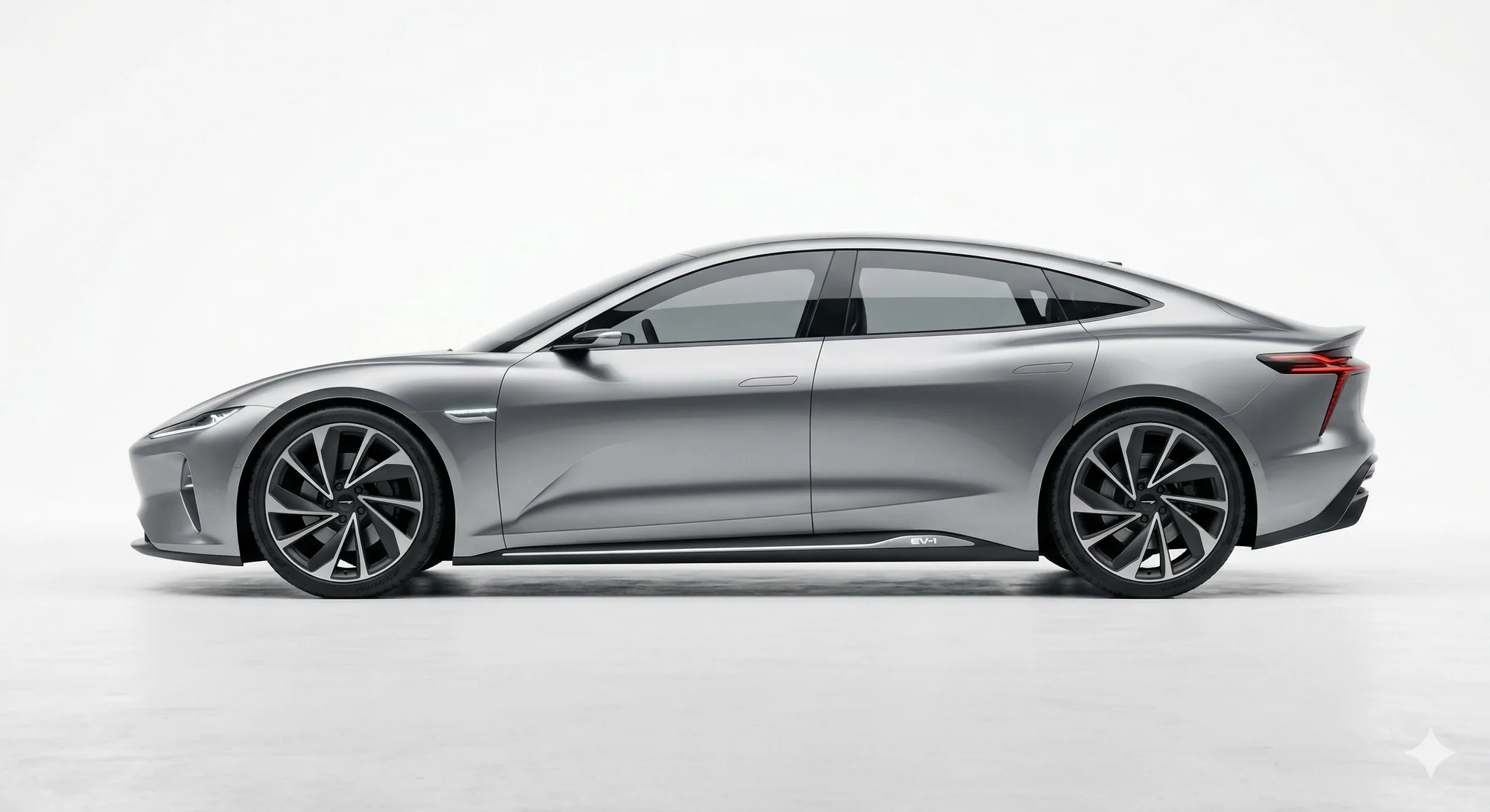
Premium sedan side profile
Why solid-state piezo

The technology behind the surface.

Parts become smart
Handles, emblems, trims, panels become touch controls. No visible change. It just does more.
All-weather reliable
Rain, snow, ice, dirt, any glove. No false triggers, every time.
Lower cost, simpler
No buttons, seals, or holes. Fewer parts, cleaner assembly, higher value.
Advanced interaction
Knock recognition, pattern commands, elbow activation. Real-time tuning under road vibration.
OEM and Tier 1 value
OEMs get seamless design. Tier 1 turns standard parts into high-value modules.
Self-diagnostics
Verify every touch point without physical activation. Field health monitoring built in.
Why solid-state vs capacitive How piezo technology works
For Tier 1 suppliers

Your exterior part. Our technology inside.

Standard exterior parts, handles, emblems, trims, become high-value functional modules. You expand your scope and margin per program. The OEM gets seamless, proven innovation.

RNC provides the sensing technology, integration support, and automotive-grade electronics. You deliver a smarter part.
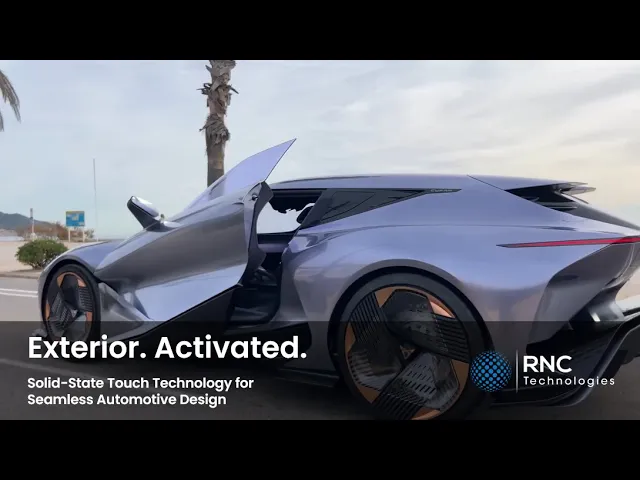
PiezoTouch automotive use case
Automotive use case video
Solid-state touch technology for seamless automotive design.
Development process

From concept to series production.

For OEMs: we work directly with your design and engineering teams. For Tier 1 suppliers: we enable you to turn standard exterior parts into high-value functional modules.

1
Concept definition
Feasibility and interaction concept
Joint review of the target part and intended function. Definition of interaction concept and feasibility assessment based on material, geometry, and environment.
2
Integration design
Module and part adaptation
RNC-led adaptation of both the module and Tier 1 part. Module tuned to specific geometry and environment. Internal features refined for optimal integration.
3
Prototype and evaluation
Joint testing and validation
Production-grade prototypes developed for integration testing. Joint evaluation with Tier 1 and OEM for functional validation and feedback.
4
Validation
Formal documentation
Validation by Tier 1, OEM, or accredited lab. Supported by RNC data, test results, and full documentation.
5
Process support
Production alignment
Support for DFMEA, PFMEA, test and assembly equipment. Alignment with Tier 1 development and production flow.
6
Series production
Scalable delivery
Delivery of sealed, automotive-grade modules. Designed for scalable and repeatable production integration.
Deployed

Approved for series production.

RNC's solid-state exterior touch technology has been approved for series production by a major European automotive OEM. The technology is in active development with multiple Tier 1 partners for emblem activation, door handle integration, tailgate release, and charging door controls.

OEM
Series approved
Tier 1
Active programs
4+
Application types
EU
European programs
Automotive
Working on an automotive interface project?

Tell us about your surface, power budget, and sensing requirements.

Start a conversation
Tier 1 Partners
Want to add touch to your part?

Turn your standard exterior part into a high-value functional module.

Talk to engineering